The Invisible Cost of Manual Ops: What You Don’t Measure Can Hurt You Most
Manual workflows rarely fail loudly, but they quietly slow execution, increase rework, and drain resources. Most of this inefficiency goes unmeasured, hidden beneath stable outputs and routine processes. This piece breaks down where the real cost lies and why it compounds as organizations scale.
15-Mins

Manual ops quietly drain time, money, and trust. A spreadsheet-driven check, an email approval, a manual reconciliation – each feels harmless. Closures occur, payments are issued, and reports are delivered.
However, at scale, these invisible steps compound into high friction, slow decision-making, rework, and increased operational risk. The highest cost in modern operations is not what leaders see on dashboards, but it is what teams quietly absorb every day to keep things running. What makes this dangerous is that most of its cost is never measured.
Efficiency Is Measured at the Output, Not the Execution
Most organizations track what gets delivered, not how much effort it takes to deliver it.
SLAs measure timeliness, not the number of manual interventions behind them
“On-time close” often hides late nights, parallel reconciliations, and post-close fixes
Output metrics reward stability even when the execution underneath is fragile
Effort is treated as sunk cost, not as a signal of poor process design
An Industry survey found that 68% of workers regularly spend time on low-value, inefficient tasks, indicating a high proportion of effort is absorbed by non-core work activities, which is a strong proxy for hidden operational effort that isn’t formally measured.
Manual Work Becomes Invisible Once It Becomes Routine
Manual work doesn’t stay visible for long. Once repeated, it becomes institutionalized.
Spreadsheet bridges, email approvals, and ad-hoc checks turn into permanent workflows
Exceptions slowly become the norm rather than edge cases
Senior talent spends time validating data instead of analyzing it
Teams stop flagging inefficiency once it’s labeled “how things work.”
In large enterprise back-office teams, research shows that 40-50% of daily activity involves manual review, correction, or coordination rather than core operational or analytical work.
Rework Is the Most Underestimated Cost in Operations
Most errors are not prevented upstream. They are discovered downstream when:
One mistake creates multiple touchpoints across teams and systems
Rework is treated as operational hygiene instead of a design flaw
Accuracy metrics stay high while cycle times quietly stretch
Manual data entry has an error range from about 1% to 5%, and rises sharply in manual workflows.
As per estimation, fixing an error typically costs 5 to 7 times more than preventing it at the source. Exception handling can add 2-4 additional days to monthly close and execution cycles without triggering any formal escalation. Yet rework is rarely tracked, owned, or escalated because teams have learned to absorb it quietly.
Fragmented Ownership Keeps Root Causes Hidden
Execution today spans tools, teams, and service providers, but ownership does not.
No single owner sees the full execution chain end-to-end
Problems are fixed locally instead of structurally
Institutional knowledge replaces system intelligence
Operational data lives across spreadsheets, inboxes, and disconnected systems
As a result, leaders often make decisions using data that is one to three weeks old. Execution becomes reactive by default, especially as transaction volumes increase.
The Human Cost Most Dashboards Miss
Invisible inefficiency is absorbed by people long before it hits financials.
High performers spend disproportionate time on clerical execution
Burnout increases when effort doesn’t translate into impact
Attrition rates are 30 to 50% higher in teams dominated by manual operational work
Hiring more people masks inefficiency instead of removing it
Over time, organizations lose experienced talent while retaining broken processes.
What Invisible Inefficiency Really Costs
When left unmeasured, execution friction compounds quietly:
Close cycles slow by 20 to 40%
Operating costs inflate by 5 to 10% without a visible line item
Compliance and audit risk increase due to inconsistent controls
Revenue leaks through slow responses and missed follow-ups
Scalability breaks as volume grows
Across large enterprises, hidden execution friction typically erodes an avoidable operational value annually without ever being recognized as a loss.
How Neoflo Makes the Difference
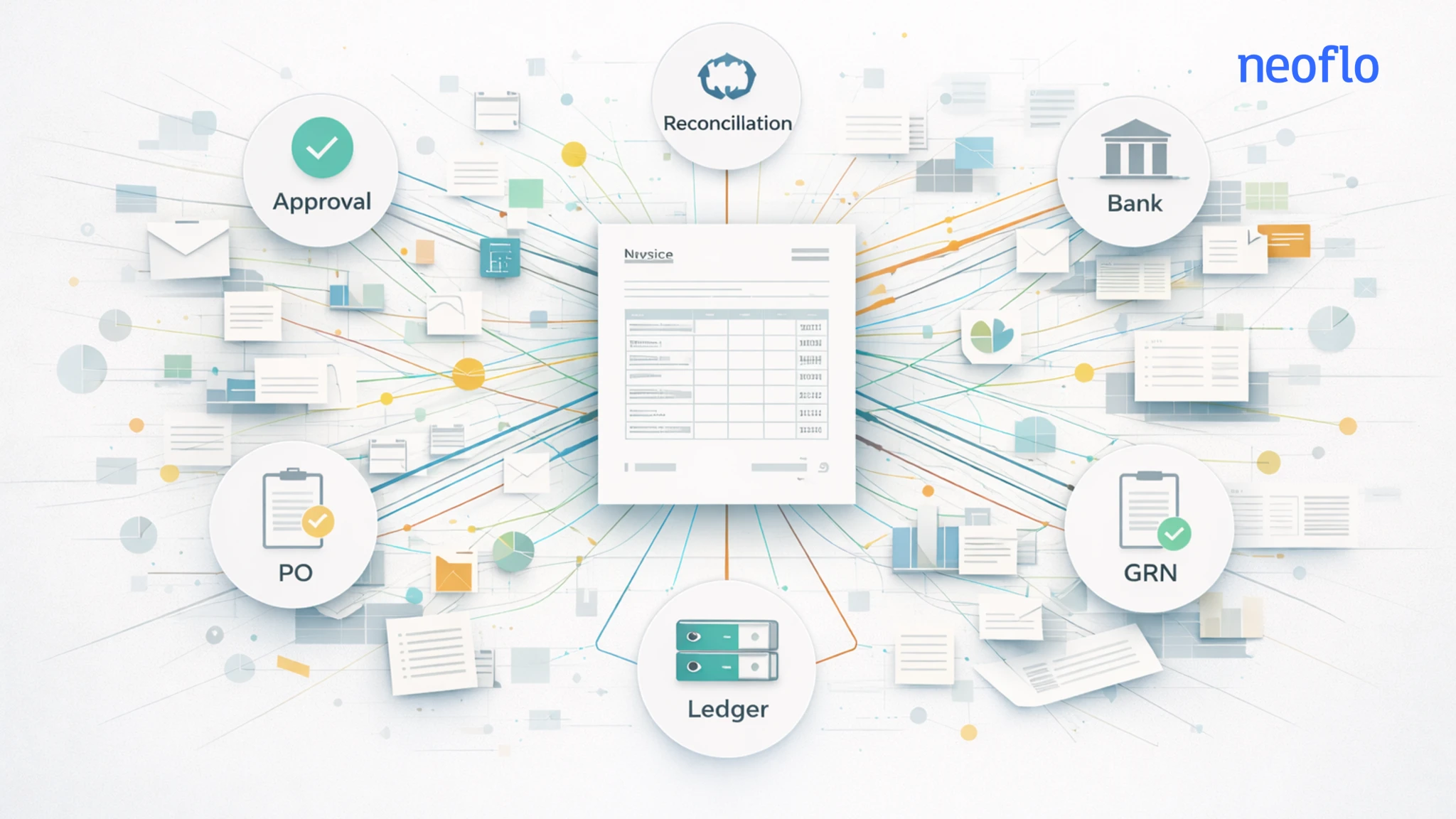
Neoflo is not another tool layer, but the execution layer teams have been compensating for manually.
Makes execution visible, not just outcomes
Identifies friction before it turns into rework
Combines AI speed with human judgment to fix issues at the source
Owns end-to-end outcomes instead of isolated tasks
Converts operations from effort-driven to execution-driven
Customers typically see:
30 to 50% reduction in operational execution costs
3× throughput improvement without adding headcount
99%+ accuracy with built-in human oversight
Manual operations don’t fail loudly. They quietly tax your business every day. Start by measuring what’s actually slowing you down. Talk to Neoflo about measurable, outcome-led execution: hello@neoflo.ai